The Angler's Craft
Equestrian Basics: Lessons, Licences, Trails
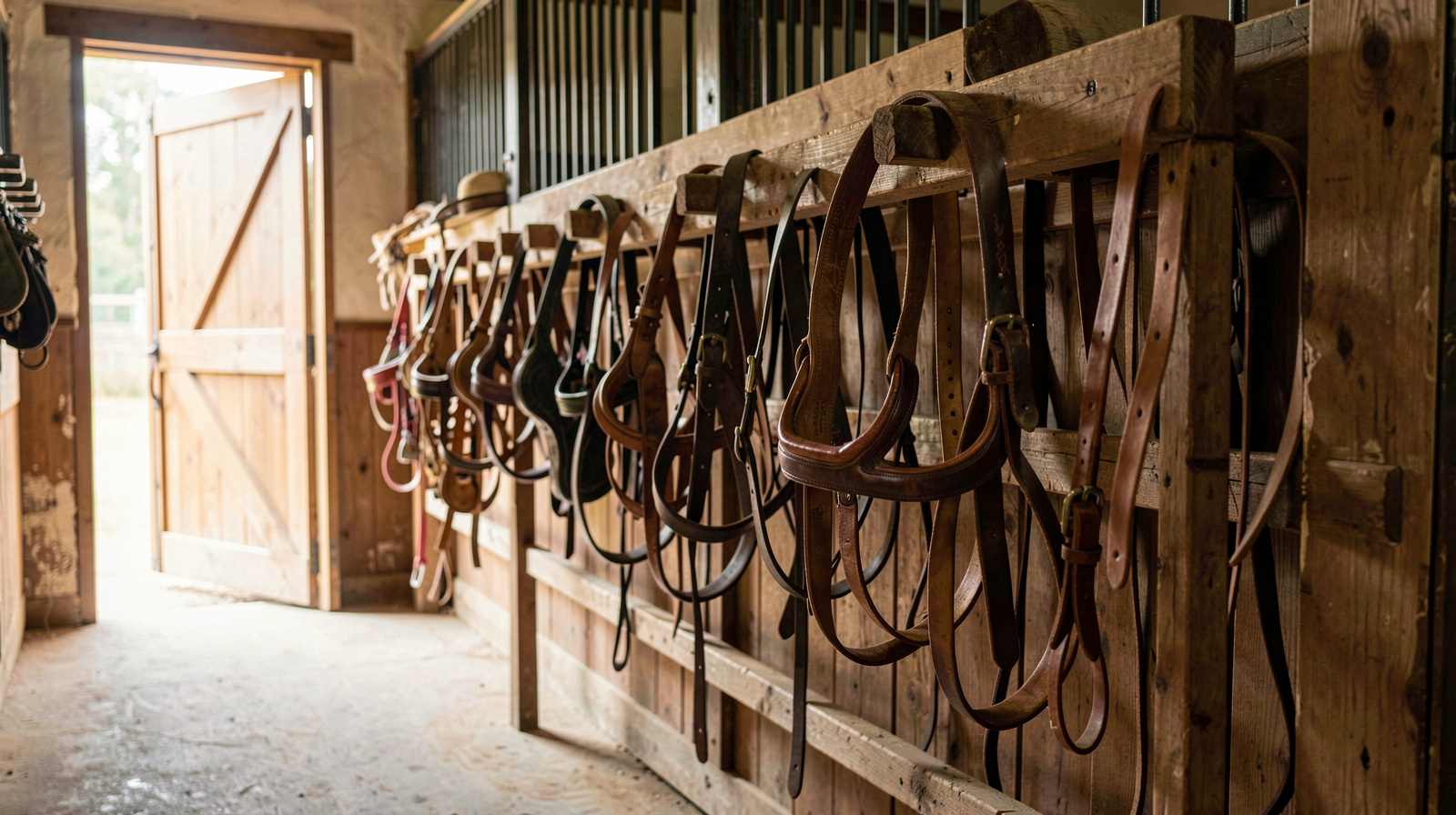
Equestrian riding is a sport built on weekly repetition, not on a single outing. A rider learns position, balance and control through regular lessons, and most riding centres organise their week around fixed slots, from beginner groups to advanced work. The practical questions that follow, licence, pricing, ride length, trail marking, matter more than any single session.
What does a riding centre actually organise each week?
A riding centre runs on a timetable. The week is divided into slots, and each slot has a level, an age group and a horse or pony assigned to it. Beginners usually ride in groups of six to ten, with one instructor on the ground or on horseback depending on the exercise. More advanced riders work on specific skills: transitions, jumping grids, or work without stirrups.
The horse side of the operation is just as structured. Horses are worked on a rotation so that no animal carries the same load every day. Feeding, turnout and rest days are planned around the lesson schedule, not the other way round. A centre that publishes its weekly slots is telling you something useful: the horses have a routine, and the lessons have a shape.
For readers who want to see how a working centre near the Cévennes describes its own weekly organisation, from the string of horses to the lesson slots, centre-equestre-anduze.com sets it out plainly. The same logic applies anywhere: a stable that plans its week is a stable that plans its horses' welfare.
What does the FFE licence cover, and what does it not?
The FFE licence, issued by the French Equestrian Federation, is the standard membership document for riders in France. It covers insurance for riding activity, access to federation-run competitions, and affiliation to a club. It is required for most organised riding, including lessons at a registered centre.
What it does not cover is worth stating clearly. The licence is not a guarantee of a fixed number of lessons, and it is not a subscription to a specific club. It does not replace a medical certificate where one is required, and it does not cover activities outside the federation's scope. Riders sometimes confuse the licence with a lesson package. They are separate things: one is a membership and insurance document, the other is a purchase of riding time.
How long is a first ride, and who leads it?
A first ride is usually short. One hour at the walk, with an instructor or a guide leading or accompanying the group, is the most common format. It is long enough to feel the horse move and short enough that a beginner's muscles do not give out before the ride ends.
Pony rides for children follow the same principle. A guide walks alongside or leads the pony, and the pace stays at the walk. The aim is contact, not performance. Riders who enjoy that first hour can then move to longer sessions, and the progression from a guided hour to an independent ride is normally gradual.
What do ten-hour cards and price lists really include?
A ten-hour card is a prepaid block of riding time. The rider buys ten hours and books them across the weeks. The advantage is a lower hourly rate and a fixed commitment. The disadvantage is that unused hours may expire, so the terms matter as much as the price.
Price lists usually separate several lines: the hourly lesson, the ten-hour card, the licence, and sometimes equipment hire or a one-off registration fee. Reading each line carefully avoids surprises. A cheap hourly rate with a separate annual fee is not the same as an all-inclusive card. Ask what happens if a lesson is cancelled by the centre, and what happens if the rider cancels.
How are trails marked in the Cévennes and the Gard?
Trail marking in the Cévennes and the Gard follows the French long-distance path system. A painted rectangle, usually white over another colour, indicates a route. The colour tells you the type of path: red and white for long-distance routes, yellow for local loops, and other combinations for specific networks.
Riders should read three things on a marker: colour, shape and support. A mark on a rock is more durable than one on a tree, and a faded mark may mean the route has been rerouted. Local riding maps and the departmental tourism offices publish the current networks. Trail markers are maintained by volunteers and local authorities, so a missing mark is not proof that the path is closed.
How do you prepare a multi-day ride?
A multi-day ride is a small logistics project. The horse needs water, feed and rest at intervals that match its condition. The rider needs stages that are shorter than a walker's day, because a horse at the walk covers roughly five to six kilometres per hour, and saddling, feeding and cooling down add hours to each stage.
Overnight stops must accept horses. That means a field, a stable or a paddock, plus water. Booking ahead is normal on popular routes in the Cévennes. Saddlebags should carry the rider's personal kit, but heavy items travel better in a support vehicle when one is available. A first multi-day ride is best kept to two or three days, with short stages and a known route.
Why does repetition matter more than a single outing?
Riding is a motor skill, and motor skills are built by repetition. A rider who rides once a month will progress more slowly than one who rides weekly, even if the monthly ride is longer. The weekly slot is what builds balance, leg position and feel for the horse's movement.
The same applies to the horse. Regular, moderate work keeps a horse fit and calm. Irregular, intense work does neither. This is why riding centres organise their weeks around fixed slots and rotate their horses: the routine serves both sides of the partnership.
What should a beginner ask before booking?
A beginner should ask four things. First, the group size and the level of the other riders. Second, whether the ride is led or independent. Third, what equipment is provided and what the rider must bring. Fourth, the cancellation terms for both sides.
A centre that answers these questions clearly is easier to work with. The answers also tell the rider whether the format suits them. A one-hour guided walk and a two-hour independent ride are different products, and both are legitimate depending on experience.