The Bay and Its Seasons
Billingsgate Shoals
Billingsgate Shoals is the drowned island that became Cape Cod Bay's best striped bass ground. How it formed, how it fishes and how to read it.
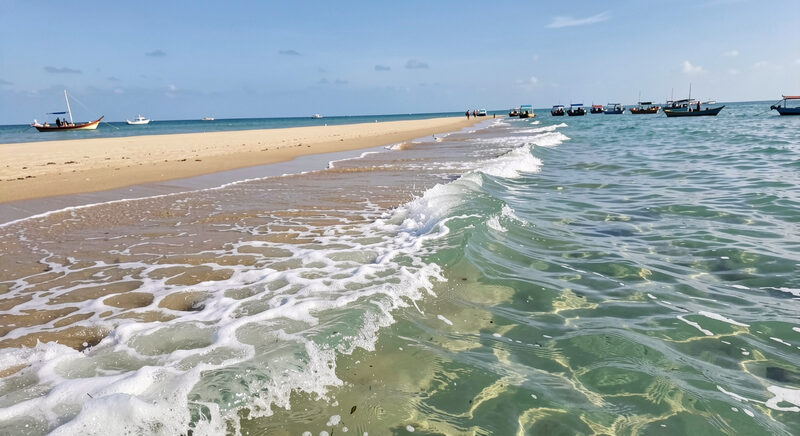
Billingsgate Shoals is the most important piece of bottom in Cape Cod Bay. It is a long, shallow sand bar that runs for several miles across the middle of the bay, the remains of an island that was washed away by storms in the nineteenth century. What is left is a broad shelf of sand that rises close to the surface and drops into deeper water around its edges, and that shape is exactly what concentrates bait and the fish that hunt it.
For anglers, Billingsgate is less a single spot than a whole system. It offers shallow water for light tackle and fly fishing, deeper edges for jigging and trolling, and moving water that positions fish predictably through the tide. This guide explains how the shoal formed, how it fishes through the season and how to read it.
An island that became a shoal
Billingsgate was once an island, a low sandy place with a settlement and a lighthouse on it, sitting off what is now Wellfleet. Through the nineteenth century, storm after storm ate at it. The sea took the buildings, then the light, and finally the ground itself, until the island was gone and only its base remained beneath the surface. What the sea left behind is the shoal that bears its name.
The bar today is long and relatively shallow, rarely deeper than about fifteen feet on its crest, with water in the thirties and deeper around it. That contrast between the shallow top and the deeper surround is the whole story of the fishing. Bait gathers over the shallow ground, and larger fish patrol the edges where the bottom falls away.
How the tide works the shoal
Because the shoal sits in the middle of a shallow bay, the tide sweeps across it twice a day, and the direction of the current reverses with the flood and the ebb. On the flood the water pushes one way across the bar, on the ebb it runs the other way, and the fish tend to feed hardest when the water is actually moving rather than at slack.
Many anglers who know the shoal prefer the ebb, when the draining water pulls bait off the shallows and lines the fish up along the edges. Others do well on the flood as new water pushes bait onto the bar. The point is not one tide over the other but the fact that the shoal rewards anyone who fishes the movement and not the pause. A slack tide over Billingsgate is often a quiet one.
What swims over the shoal
Billingsgate is best known for striped bass, and in a good year the shoal holds fish from late spring through autumn. Bluefish also work the area, especially in summer, and they bring a faster, sharper kind of fishing when they are on the feed. In deeper water around the bar, bluefin tuna pass through the bay in the warmer months, and anglers working the bottom sometimes find tautog on the rougher ground.
The bait that ties the whole system together is the sand eel, a slim silver fish that gathers over the sandy bottom in huge numbers. Where the sand eels are, the bass are rarely far behind, and much of the fishing on Billingsgate is really a hunt for the bait. Birds working the surface are the simplest sign that something is pushing sand eels up, and a boat that follows the birds is often a boat that finds fish.
How anglers read the bar
Reading Billingsgate means reading edges. The crest of the shoal is shallow and can be worked with light tackle, soft plastics, slim swimming plugs and flies, especially when fish are up on the surface chasing bait. The deeper water around the bar suits jigging on wire line, umbrella rigs and trolling, where the angler is covering water and searching rather than casting to a visible fish.
The shoal is large, several miles of it, and that scale is both an opportunity and a problem. There is a great deal of water to search, and a boat that simply motors onto the middle of the bar and drops lines may fish over empty sand. The anglers who do well gather information first, from the birds, from recent reports, and from the shape of the bottom on a chart, and then work the specific edges where the depth changes.
Getting there and fishing it safely
Billingsgate lies out in the open bay, several miles from Rock Harbor, and reaching it means a run across shallow, tidal water. The boats that fish it from Rock Harbor have to work within the harbor's tidal window on the way out and back, which is one reason the shoal is often fished on a full day rather than a half. On the bar itself the water is thin in places, so a boat has to watch the depth and the tide rather than simply run to a mark.
The other thing to respect on Billingsgate is other boats. On a good morning the shoal can be busy, with trollers, jiggers and casters all working the same edges. Keeping a sensible distance, watching where a trolling boat is heading and not cutting across a spread are ordinary courtesies that keep a crowded ground usable for everyone.
A crowded, productive ground
Because Billingsgate is the best-known spot in the bay, it is also the busiest. On a good morning the shoal can hold a crowd of boats, some trolling wire, some jigging, some casting to surface fish, all working the same water. That is part of the character of the place. It also means that courtesy and awareness matter, particularly when boats are trolling in different directions across the same bar.
None of that changes the fundamental appeal of the shoal. It is a piece of drowned land that the sea turned into one of the finest fishing grounds on the East Coast, and it rewards the angler who takes the time to understand its shape and its tides. The guide to umbrella rigs, jigs and trolling explains the methods used over the bar, and the guide to striped bass in Cape Cod Bay covers the fish most anglers come for. For the water that surrounds it, see the section on the bay and its seasons.