The Angler's Craft
Horse Riding Basics for Cape Cod Bay Anglers
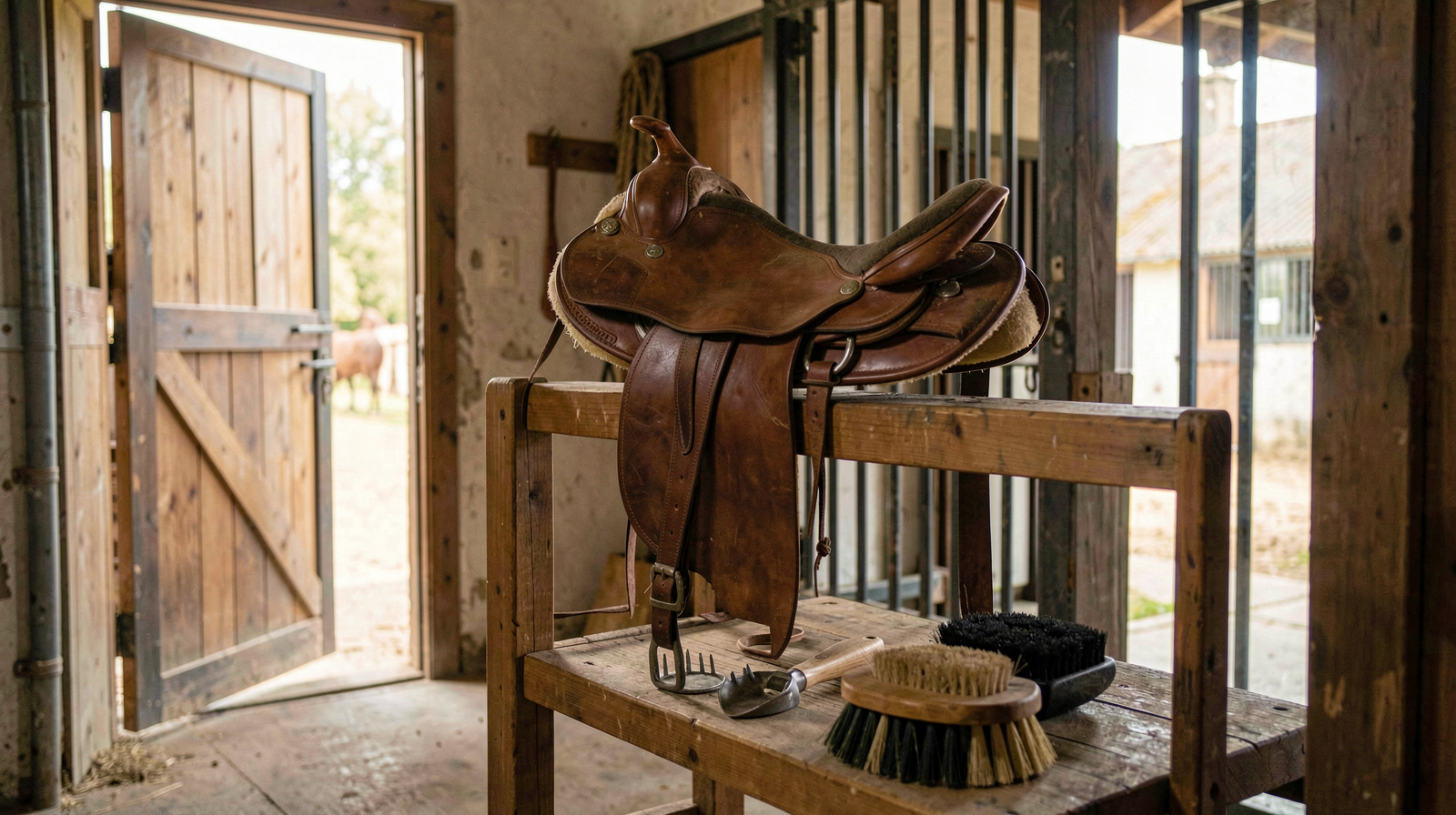
Horse riding is a skill you build in short, repeated sessions, not in one long day. A beginner starts with a supervised hour at the walk, learns to sit, steer and stop, and only then adds speed or distance. The same patience that makes a good angler makes a good rider: read the conditions, prepare the gear, and let the day set the pace.
What a riding centre actually organises each week
A working riding centre runs on a weekly rhythm. The schedule is built around the horses first, because the horses decide how many hours the yard can offer. Feed, turnout, exercise and rest fill the morning. Lessons, hacks and pony sessions fill the afternoon and the weekend.
A typical week includes group lessons split by level, private slots for riders who need specific work, and shorter accompanied outings for people who are not ready for a full lesson. The cavalry side matters as much as the teaching side: each horse has a workload limit, a shoeing cycle and a rest day. When a yard publishes its timetable, it is really publishing the capacity of its herd.
For anyone curious about how this is structured in practice, a practical magazine on riding in the Cévennes and the Gard documents weekly organisation, from the cavalry to the time slots, alongside lessons, FFE licensing, courses and trail rides around Anduze. It is written as a field notebook rather than a sales page, and each entry carries its place, its terrain and its season.
Do you need a licence to ride?
In France, the federal licence delivered through the FFE is the standard framework for riding in a club. It is not a driving licence and it is not a certificate of competence. It is an insurance and membership package tied to a federation.
What it covers is straightforward: civil liability for damage caused to a third party while riding, and personal accident cover during supervised club activity. What it does not cover is everything outside that frame. Riding a friend's horse in a field, hacking alone on a private animal, or any activity outside the declared club structure falls outside the standard cover.
A club will usually offer two routes. The ten hour card suits a rider who wants to test the sport without committing to a year. The annual licence suits a rider who intends to come back weekly. The card is a block of supervised hours. The licence is a season of membership. Reading a price list line by line is the only way to know which one fits, because the two are not interchangeable.
How are trails marked in mountain country?
Trail marking follows a simple visual grammar. A painted rectangle on a rock or a tree is the base unit. Colour tells you the difficulty or the type of route. Shape tells you whether you are on the right path or have drifted onto a variant.
A continuous mark means continue. A mark with a cross means wrong way. A mark with an arrow means the path turns. On stone, the paint lasts for years. On wood, it fades faster and needs repainting. In the Cévennes and the Gard, routes often cross granite, schist and chestnut coppice in the same afternoon, so the support changes constantly and the rider has to keep looking.
For a rider, reading marks is a safety skill, not a navigation hobby. A missed mark on a forest track can add an hour. A missed mark on a ridge can put a group on a descent it did not plan. The rule is simple: if you have not seen a mark for several minutes, stop and go back to the last one.
Preparing a multi day ride
A multi day ride is a small logistics project. The horse carries the rider. The rider carries the plan.
Start with stages. A realistic day on mixed terrain is shorter than a road day, because climbs, descents and ground conditions cost time. Plan the night stops first, then fit the riding between them. Water is the constraint that decides most itineraries: horses drink a lot, and not every stream is accessible or clean.
Saddlebags hold what the horse can carry without losing balance: a light change of clothes, a basic first aid kit, hoof pick, spare reins or cord, a headlamp, and food for the rider. Everything else stays behind. Weight on one side only is worse than weight on both sides.
Weather decides the rest. A route that works in June may be unrideable in August after a dry spell, and a route that works in September may be closed in spring. Local advice beats any map, and asking at the yard before leaving is not a formality.
What a first hour on horseback feels like
An accompanied hour at the walk is the most accessible format for a first contact with the sport. The horse walks. The rider sits, breathes, and learns to follow the movement instead of fighting it.
The first ten minutes are usually uncomfortable. The rider grips with the knees, holds the reins too short, and looks down. The next twenty minutes are about letting go: longer leg, softer hands, eyes up. By the end of the hour, most beginners can steer a simple turn and stop without pulling.
This is why the hour format exists. It is long enough to feel something real and short enough not to exhaust a beginner or a horse. It is also the format that tells a rider honestly whether they want to continue.
How do you choose between a card and a licence?
Count the sessions you will actually ride. If the answer is fewer than ten in a year, a card is the rational choice. If the answer is more, the licence usually costs less per session and adds the federation framework.
Then check the small print. Does the card expire? Is it transferable? Does it include the same insurance as the licence? Are there restrictions on which lessons it can be used for? A yard that answers these questions clearly is a yard that runs a clear operation.
Finally, match the format to the goal. A rider who wants to hack out needs hours in the arena first, because a horse on a trail is a different animal from a horse in a school. A rider who wants to compete needs a coach and a regular slot. A rider who wants a weekly outdoor habit needs a yard with reliable horses and a timetable that fits around work.
Reading the ground before the ride
Ground conditions matter more than most beginners expect. Wet clay is slippery. Loose stone on a descent is worse. Deep leaf litter hides roots. Sand is forgiving. Grass on a slope changes with the dew.
A rider learns to read the surface the way an angler reads a tide line: not as scenery, but as information. The same discipline applies to the horse. A horse that is fresh, tense or distracted on the ground will be the same under saddle. Grooming before a ride is not cosmetic. It is a check of the animal's condition and mood.
A sport of repetition
Riding rewards frequency. One hour a week for a season builds more skill than one long day a month. The body learns balance through repetition, and the rider's confidence grows from small, familiar successes.
That is the honest case for the sport. It is not fast, it is not cheap, and it does not reward impatience. It rewards the same thing that fishing rewards: showing up, paying attention, and adjusting to what the day gives you.