Fish and Techniques
Striped Bass in Cape Cod Bay
How striped bass move through Cape Cod Bay, where they hold on the flats and shoals, and the light tackle, jigs and plugs that reach them.
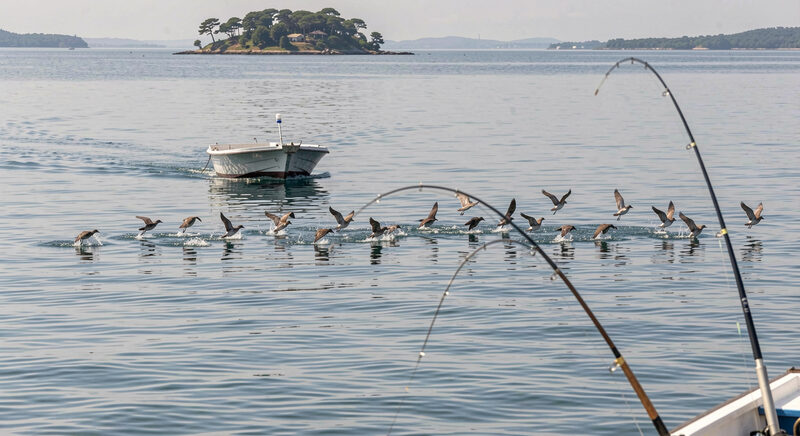
The striped bass is the fish that made Cape Cod Bay famous, and for good reason. It grows large, it fights hard, it feeds in shallow water where it can be reached from a small boat or even the shore, and in a good year it is present in the bay from late spring until the cold of late autumn. For many anglers, everything else in the bay is a bonus around the bass season.
Stripers are also a fish that rewards understanding. They move with the tide and the bait, they hold on specific kinds of structure, and they can be caught on everything from a fly to a wire line jig. This guide covers how striped bass behave in Cape Cod Bay, where they hold and how anglers reach them.
A fish built for moving water
The striped bass is a coastal migrant that spends much of its life moving between the estuaries where it spawns and the coastal waters where it feeds. In Cape Cod Bay, that means fish that arrive in spring and stay through the warm months, following the bait and the temperature. They are strong, streamlined and comfortable in current, which is why the tide matters so much when fishing for them.
A bass positioned in moving water can hold almost effortlessly and wait for food to come to it. The same fish in slack water has to roam. That is the root of the old advice to fish the tide: it is not superstition but the simple fact that moving water puts bait and predator in the same place at the same time.
Where they hold in the bay
Striped bass in Cape Cod Bay gather on the edges of structure. The great example is Billingsgate Shoals, where the shallow crest of the bar meets deeper water around it, but the pattern repeats all over the bay. Any place where the depth changes, where the current accelerates, or where bait collects is a place worth fishing.
The flats in front of Rock Harbor are another key area, especially in the low light of early morning and evening. Bass push onto the shallows to feed on sand eels and other bait, and an angler working quietly along the edge of a flat can find fish in water barely deep enough to float a boat. The guide to reading the tides at Rock Harbor explains how the water moves over those flats.
Following the bait
The single most useful skill in bass fishing on the bay is finding the bait. Sand eels are the main currency, and where they gather, bass are usually close. The simplest signal is a flock of birds working the surface, diving on bait that has been pushed up by feeding fish. That is the classic blitz, and it is as exciting as fishing gets, with bass slashing at the surface and the whole bay seeming to boil.
Blitzes are wonderful when they happen, but they are not the whole fishery. Much of the time the fish are below the surface, feeding on bait that the angler cannot see. Then the work becomes reading the bottom, the tide and the wind, and covering water until the fish are found. That is slower and less dramatic, but it is how most good bass are caught.
The tackle that reaches them
Striped bass can be caught on a wide range of gear, and the choice usually comes down to depth. In shallow water, where fish are up on the flats or feeding on the surface, light tackle works beautifully: soft plastics, slim swimming plugs, topwater lures and flies all take fish and all feel the fight at its best. This is the most enjoyable way to fish the bay, and it is why so many anglers love the flats.
In deeper water, where the fish are holding near the bottom or along a drop-off, heavier methods come into play. Wire line jigging is a Cape Cod Bay tradition, letting an angler work a jig deep and feel the bottom. Umbrella rigs and trolling cover water and search for fish over a wide area. The guide to umbrella rigs, jigs and trolling compares these methods in detail.
Handling and release
Striped bass are managed under coastwide rules that set size and bag limits, and those rules change from year to year, so any angler should check the current regulations before keeping a fish. Beyond the rules, there is a strong culture on this coast of handling bass well and releasing them in good condition, especially the larger breeding fish.
Good handling is simple. Wet your hands, support the fish horizontally rather than hanging it by the jaw, keep it out of the air briefly, and release it into moving water so it can revive. A bass that swims away strongly is a fish that will be there next season, and that is the whole point of a fishery that depends on migration.
Reading a blitz
When bass push bait to the surface, the water comes alive and the fishing becomes simple in the best way: cast into the commotion and hold on. But a blitz also rewards a little discipline. Fish move fast when they are feeding on the surface, so a boat that sits still while the school travels quickly falls behind. The trick is to stay with the fish, reposition quietly and avoid running straight through the school, which scatters it and ends the action for everyone.
It also helps to remember that the surface show is only part of the picture. Below the visible fish there are usually more, holding deeper and feeding on the same bait. An angler who drops a jig or a soft plastic under a blitz often finds fish that the surface casters miss, and those fish can be larger than the ones tearing at the top.
A fish worth learning
Striped bass fishing on Cape Cod Bay is a study in reading water. The angler who understands the tide, finds the bait and works the edges will catch fish, and will enjoy the process of doing it. The guide to Billingsgate Shoals shows the bay's best-known bass ground, and the section on the bay and its seasons sets the bass season in the wider year.